
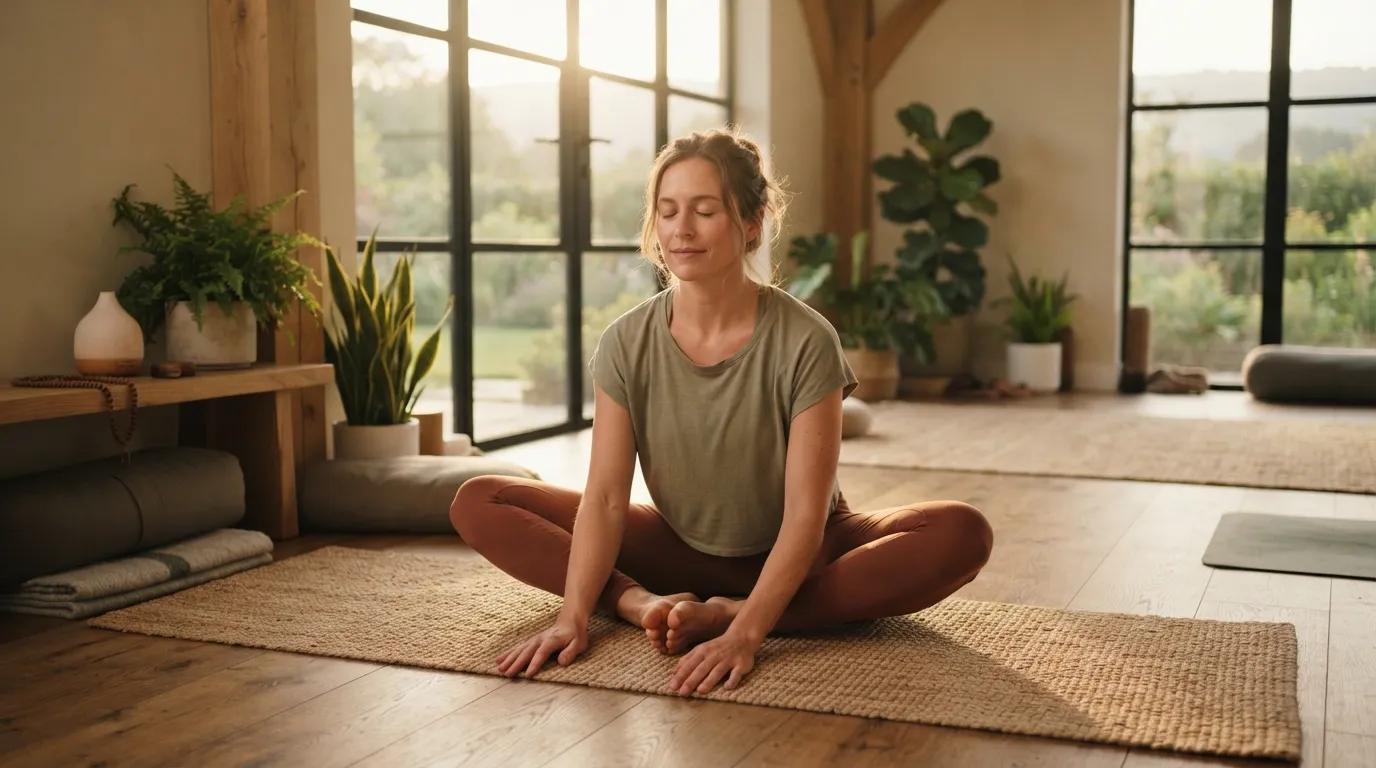
You are lying still on your mat, your hips sinking deeper into a stretch you have held for three long minutes, when suddenly, without warning, tears begin to fall, and you cannot explain why. If this has ever happened to you, you have likely asked the same question thousands of people search for every day: can yin yoga release emotional trauma? This quiet, slow-moving practice is becoming one of the most talked-about tools for yin yoga for emotional healing in the United States, and for good reason.
Yin Yoga holds gentle poses for several minutes at a time, allowing the body to soften and the mind to settle, which many practitioners believe helps surface and release stored emotions. It is important to understand that Yin Yoga supports healing but does not replace therapy or professional mental health care.
In this guide from One Yoga International, you will learn what emotional trauma really is, how Yin Yoga interacts with the nervous system, and how to practice safely as you begin your own healing journey.
What Is Emotional Trauma?
Emotional trauma is the lasting emotional and psychological response to a distressing or overwhelming experience. It is not always caused by one dramatic event; it can also build slowly through years of stress, neglect, or unresolved grief. Trauma changes the way the brain and body respond to stress, often leaving a person feeling anxious, disconnected, or stuck in old patterns long after the original event has passed. Understanding this foundation helps explain why so many people turn to gentle movement practices when searching for relief.
Physical vs Emotional Trauma
Physical trauma refers to injury to the body, such as an accident or surgery, while emotional trauma refers to the psychological wounds left behind by fear, loss, or overwhelming experiences. The two are deeply connected because the body often holds tension patterns that developed as a protective response to emotional pain. A stiff neck, a tight jaw, or chronically tense hips can sometimes be physical echoes of emotional stress that was never fully processed.
How Trauma Can Affect the Mind and Body
Trauma does not stay only in the mind. It can affect sleep, digestion, muscle tension, breathing patterns, and even posture. Many trauma survivors describe feeling constantly on edge, easily startled, or emotionally numb, which are signs that the nervous system is stuck in a heightened state of alert. Over time, this ongoing stress response can contribute to anxiety, fatigue, and difficulty relaxing, even in safe environments.
Can Emotions Be Stored in the Body?
The idea that emotions can be stored in the body is widely discussed in the yoga and somatic therapy world, and many licensed therapists support the concept in principle. When we experience overwhelming emotions, especially ones we could not safely express at the time, the body may hold onto that tension in the muscles and connective tissue. This is often referred to as the mind-body connection, and it is one of the core reasons practices like Yin Yoga are gaining attention for emotional healing.
Can Yin Yoga Release Emotional Trauma?
Yin Yoga may help release emotional tension and support the nervous system in processing stored stress, but it is not a guaranteed cure for trauma. Does yin yoga release trapped emotions? For many practitioners, the long holds and deep stillness create space for suppressed feelings to surface naturally. However, results vary from person to person, and Yin Yoga works best as one part of a larger emotional wellness routine rather than a stand-alone solution.
Why Some People Experience Emotional Release During Yin Yoga
Can yin yoga heal emotional trauma in a single session? Rarely, but emotional release can still happen unexpectedly. When you hold a pose for three to five minutes, especially in areas like the hips or chest, the body is forced to slow down and let go of habitual tension. This stillness often quiets the mental chatter that normally distracts us from deeper feelings, allowing suppressed emotions to rise gently to the surface.
What Research Says
Scientific research on yoga and trauma recovery is still growing, but existing studies on trauma-sensitive yoga and mindfulness-based movement consistently show reductions in anxiety, improved emotional regulation, and lower cortisol levels among regular practitioners. While research specifically on Yin Yoga is more limited than on other styles, the shared foundation of slow breathing, stillness, and nervous system regulation supports similar emotional benefits.
Expert Opinions
Many trauma specialists and yoga therapists agree that mindful movement can complement traditional treatment for trauma and anxiety. Experts often emphasize that the value of Yin Yoga lies in helping people reconnect with bodily sensations in a safe, controlled way, which can be an important step in processing difficult emotions that talk therapy alone sometimes cannot reach.
Can Yin Yoga Replace Therapy?
No. Yin Yoga is a powerful complementary tool, but it cannot replace professional mental health treatment, especially for those dealing with severe trauma or PTSD. Think of it as emotional support alongside therapy, not a substitute for it. Anyone working through significant trauma should ideally practice under the guidance of both a trauma-informed teacher and a licensed mental health professional.
How Yin Yoga Supports Emotional Healing
Yin yoga for emotional healing works through several gentle, interconnected mechanisms rather than one single effect.
Long Passive Stretches
Unlike faster-paced yoga styles, Yin Yoga holds poses for three to five minutes or longer, allowing muscles and connective tissue to fully release. This extended stillness gives the nervous system time to shift out of fight-or-flight mode and into a more restful, receptive state, which is often when emotional processing naturally begins.
Deep Breathing and Mindfulness
Slow, intentional breathing is central to every Yin Yoga session. This type of breathing activates the parasympathetic nervous system, helping to calm the body’s stress response. Combined with mindfulness, it encourages practitioners to observe their thoughts and sensations without judgment, which can be incredibly grounding for anyone healing from difficult experiences.
Nervous System Regulation
Yin yoga for nervous system regulation is one of its most valuable benefits. Regular practice trains the body to move more easily between states of alertness and relaxation, which can reduce the intensity and frequency of anxiety symptoms over time. This kind of regulation is essential for anyone whose nervous system has been affected by chronic stress or trauma.
Fascia and Emotional Awareness
Yin Yoga specifically targets the fascia, the connective tissue that surrounds muscles and organs throughout the body. Some practitioners and bodyworkers believe fascia can hold onto physical tension linked to unresolved emotions. Gently stretching this tissue may increase body awareness and create the physical conditions for emotional release to occur naturally.
Creating Emotional Safety
A calm, quiet Yin Yoga space, especially one guided by a compassionate teacher, can feel like one of the few places where a person feels truly safe to slow down. This sense of safety is essential, because emotional release rarely happens in an environment that feels rushed, judgmental, or unpredictable.
Is Yin Yoga Good for Anxiety and Emotional Trauma?
Is yin yoga good for anxiety and emotional trauma? For most people, yes, though individual experiences will vary depending on personal history and current mental health.
How Yin Yoga Helps Anxiety
Yin yoga for anxiety relief works by slowing the breath and heart rate while calming an overactive mind. The stillness of the practice teaches the nervous system that it is safe to relax, which can reduce the frequency of anxious thoughts and physical symptoms like a racing heart or shallow breathing over time.
Stress Hormone Regulation
Consistent practice has been associated with lower levels of cortisol, the body’s primary stress hormone. Yin yoga for stress relief is effective partly because it directly counters the chronic tension that keeps cortisol levels elevated, helping the body return to a more balanced baseline state.
Better Sleep
Poor sleep and anxiety often feed into one another, and Yin Yoga’s calming effect on the nervous system can make it easier to fall and stay asleep. Practicing in the evening, especially with restorative poses like Legs Up the Wall, is a popular way to unwind before bed.
Emotional Resilience
Yin yoga for emotional resilience develops over time as practitioners learn to sit with discomfort, whether physical or emotional, without immediately reacting to it. This skill translates directly into daily life, helping people respond to stress with more patience and less overwhelm.
When It May Not Be Enough
For individuals with severe anxiety disorders or complex trauma, Yin Yoga alone may not provide sufficient relief. In these cases, it should be used alongside therapy, medication if prescribed, or other professional support rather than as the only form of treatment.
Benefits of Yin Yoga for Emotional Wellbeing
The benefits of yin yoga for emotional wellbeing extend far beyond a single session on the mat.
- Reduces overall stress and tension
- Improves emotional awareness and self-understanding
- Supports mindfulness and present-moment focus
- Encourages deep physical and mental relaxation
- Improves sleep quality and consistency
- Supports long-term nervous system health
- Increases body awareness and connection
- Helps process difficult or suppressed emotions
- Complements professional therapy and counseling
- Creates greater mental clarity and calm
These emotional benefits of yin yoga, along with the broader mental health benefits of yin yoga, are why so many wellness professionals now recommend it as part of a balanced self-care routine.
Best Yin Yoga Poses for Emotional Trauma
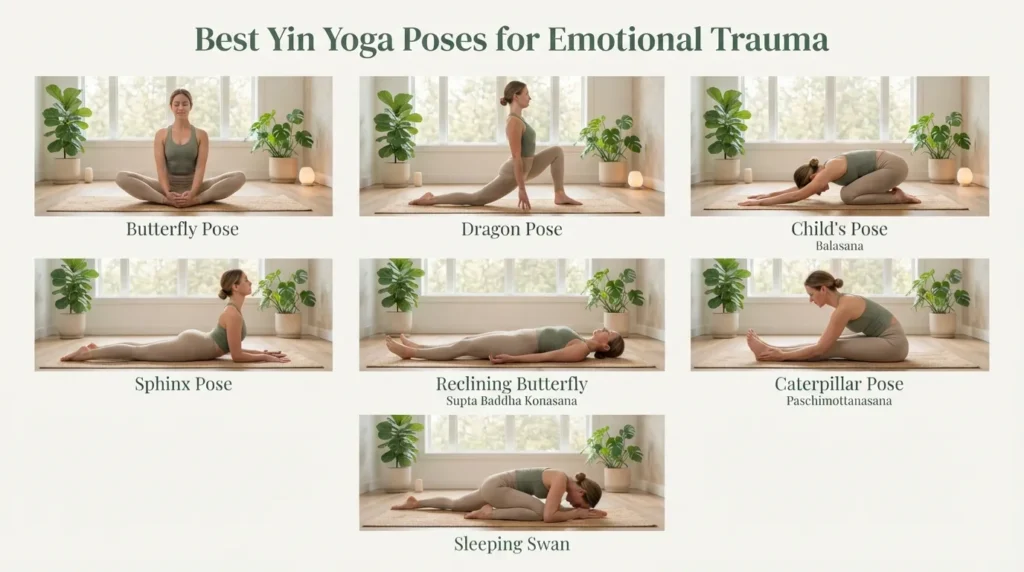
These are some of the best yin yoga poses for emotional trauma and yin yoga poses for emotional release, each targeting areas of the body known to hold tension.
Butterfly Pose
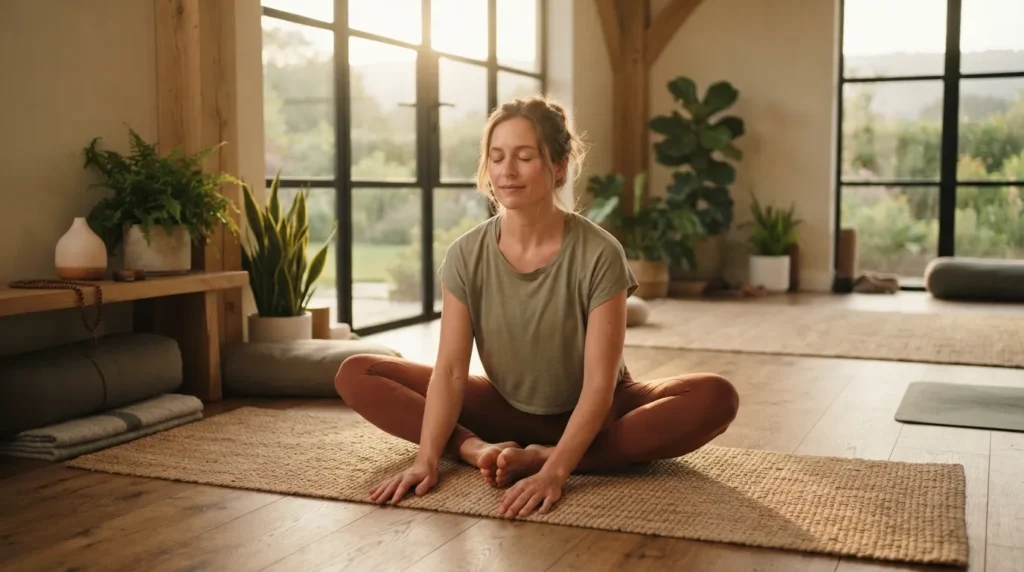
Sit with the soles of your feet together and let your knees fall open, then fold gently forward. Hold for three to five minutes. This pose opens the hips and inner thighs, areas often linked to stored emotional tension, and encourages a sense of surrender and release.
Dragon Pose
From a low lunge, sink your hips forward and down, keeping your hands on the floor or blocks for support. Hold for three to five minutes per side. Dragon Pose deeply opens the hip flexors, which many practitioners associate with fear and unprocessed emotion, making it powerful for emotional release.
Child’s Pose
Kneel and fold forward with your arms extended or resting by your sides. Hold for three to five minutes. This grounding pose creates a feeling of safety and protection, making it one of the gentlest yin yoga emotional healing exercises for beginners.
Sphinx Pose
Lie on your stomach and prop yourself up on your forearms, letting your chest open gently. Hold for three to five minutes. This mild backbend opens the heart space and can help release feelings of grief or vulnerability that are often held in the chest.
Reclining Butterfly
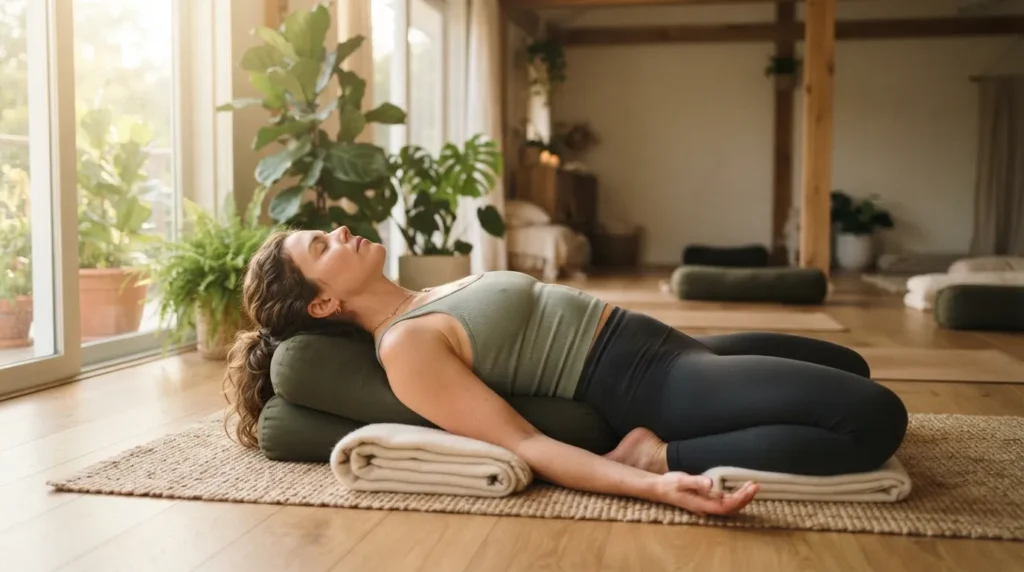
Lie on your back with the soles of your feet together and knees open wide, arms resting beside you. Hold for four to six minutes. This restorative pose allows the entire body to surrender to gravity, promoting deep relaxation and emotional softening.
Caterpillar Pose
Sit with legs extended forward and fold gently over them, allowing your spine to round naturally. Hold for three to five minutes. This forward fold calms the nervous system and encourages introspection, making it excellent for emotional processing.
Sleeping Swan
From a seated position, bring one knee forward and extend the other leg back, then fold over your front leg. Hold for three to five minutes per side. This deep hip opener is especially effective for releasing tension linked to anxiety and emotional overwhelm.
Legs Up the Wall
Lie on your back with your legs extended up a wall, arms relaxed by your sides. Hold for five to ten minutes. This restorative pose calms the nervous system, reduces anxiety, and is a gentle way to end any practice focused on emotional healing.
Safety tip: Always use props like bolsters, blankets, or blocks for support, and never push into pain. If a pose feels emotionally overwhelming, come out slowly and return to a comfortable position.
A Simple 20-Minute Yin Yoga Sequence for Emotional Healing
This 20 minute yin yoga for emotional healing sequence is ideal for beginners and can also serve as bedtime yin yoga for anxiety relief.
- Child’s Pose – 3 minutes
- Butterfly Pose – 4 minutes
- Dragon Pose – 3 minutes per side
- Sphinx Pose – 3 minutes
- Reclining Butterfly – 4 minutes
- Savasana – 3 minutes
Practice this sequence slowly, breathing deeply throughout, and allow yourself to simply notice whatever arises without judgment.
Signs You May Experience Emotional Release During Yin Yoga
Emotional release can look different for everyone, but common signs include:
- Crying, sometimes without an obvious reason
- Feeling noticeably lighter or calmer afterward
- Sudden memories or images surfacing
- Deep, unexpected relaxation
- Involuntary shaking or trembling
- Frequent yawning during or after a pose
- A sense of emotional calm once the session ends
Tips to Practice Yin Yoga Safely After Trauma
If you are working through trauma recovery, keep these guidelines in mind:
- Move slowly and never rush into a pose
- Never force a stretch beyond a gentle edge
- Focus on slow, steady breathing throughout
- Use props generously for comfort and support
- Stop and rest if you feel emotionally overwhelmed
- Practice with a trauma-informed yin yoga or trauma-sensitive yin yoga teacher when possible
- Combine your practice with professional therapy if needed
Who Should Avoid or Modify Yin Yoga?
While generally gentle, Yin Yoga is not suitable for everyone without modification:
- People with recent injuries should avoid deep stretching in affected areas
- Pregnant individuals should avoid certain deep hip and abdominal poses
- Those with severe PTSD should only practice with professional guidance
- Anyone in an acute mental health crisis should seek immediate professional support first
- People with chronic pain conditions should modify poses and use extra props
| At One Yoga International, we believe healing happens gently, one breath and one pose at a time. If you’re ready to explore trauma-informed movement further, consider joining one of our guided classes or our yin yoga teacher training online program to deepen your practice and understanding. |
Frequently Asked Questions (FAQ)
Can Yin Yoga really release emotional trauma?
It may help release stored tension and support emotional processing, but it works best alongside professional therapy rather than as a complete solution on its own.
Why do I cry during Yin Yoga?
Long, still holds can quiet the mind enough for suppressed emotions to surface naturally, which is a normal and common response for many practitioners.
Is emotional release during Yin Yoga normal?
Yes, experiences like crying, shaking, or sudden memories are common and generally considered a healthy part of the process.
How often should you practice Yin Yoga for emotional healing?
Two to three sessions per week is a reasonable starting point for most people, though even one mindful session weekly can offer noticeable benefits over time.
Can beginners do Yin Yoga for emotional healing?
Yes, Yin Yoga is beginner-friendly, and beginner yin yoga for emotional healing classes are widely available both in studios and online.
Is Yin Yoga better than meditation for emotional healing?
Neither is inherently better; they work differently, with Yin Yoga combining physical release with mindfulness, making it a helpful option for those who find seated meditation difficult.
Can Yin Yoga replace therapy?
No, Yin Yoga should complement, not replace, professional mental health treatment, especially for significant trauma or PTSD.
Which Yin Yoga pose is best for emotional release?
Hip-opening poses like Dragon Pose and Sleeping Swan are often considered especially powerful, since hip opening yin yoga for emotional release and heart opening yin yoga for emotional healing poses like Sphinx Pose target areas commonly associated with stored emotional tension.