
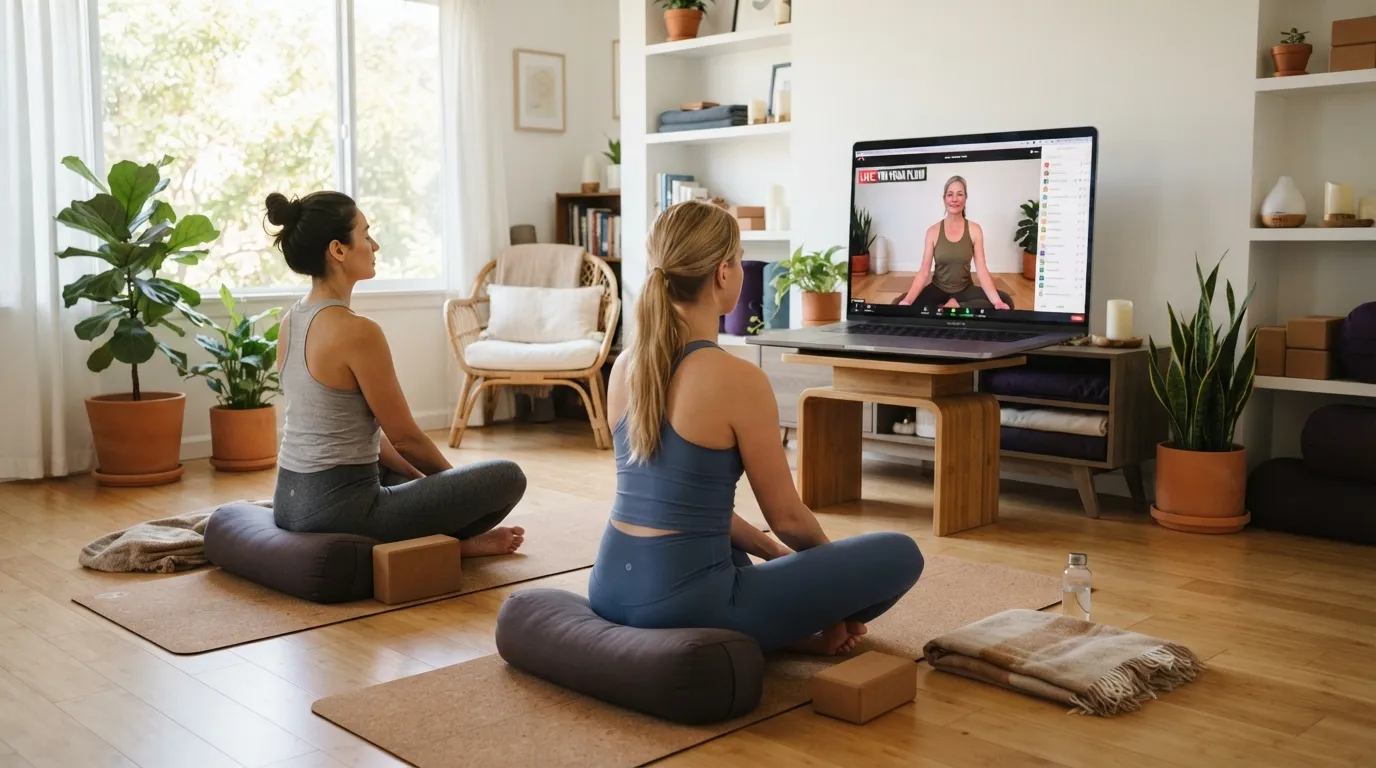
Have you ever felt so wound up by the end of the day that your body simply won’t let go, no matter how hard you try to relax? You’re not alone. Thousands of people across the United States search for yin yoga online classes every month, hoping to find a gentle, sustainable way to release tension, calm the nervous system, and finally get a good night’s sleep. Yin Yoga isn’t about pushing harder or moving faster. It’s about slowing down long enough for your body to actually soften.
At One Yoga International, we believe healing doesn’t require a studio address or a rigid schedule. It requires the right guidance, a comfortable space, and a practice that meets you where you are. That’s exactly why we built our yin yoga classes online for people just like you, whether you’re brand new to yoga or looking to deepen an existing practice.
In this guide, you’ll learn what Yin Yoga actually is, why it has become so popular as an online practice, and how it can support your flexibility, sleep, and emotional wellbeing. We’ll also walk through beginner poses, a bedtime sequence, anatomy basics, and how to choose the right online class for your needs. By the end, you’ll have a clear, simple roadmap to start your own Yin Yoga journey.
What Are Yin Yoga Online Classes?
What is Yin Yoga?
Yin Yoga is a slow, meditative style of yoga where poses are held for several minutes at a time, rather than flowing quickly from one posture to the next. Instead of building heat in the muscles, Yin Yoga targets the deeper connective tissues, ligaments, and joints. The long holds encourage the body to release tension gradually, making it one of the most restorative forms of movement available today.
How Online Yin Yoga Classes Work?
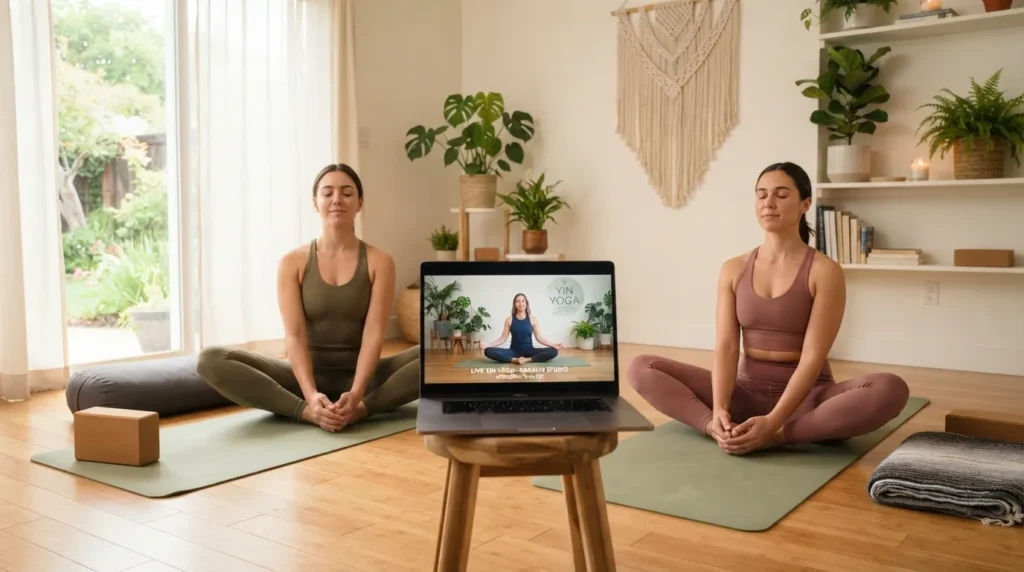
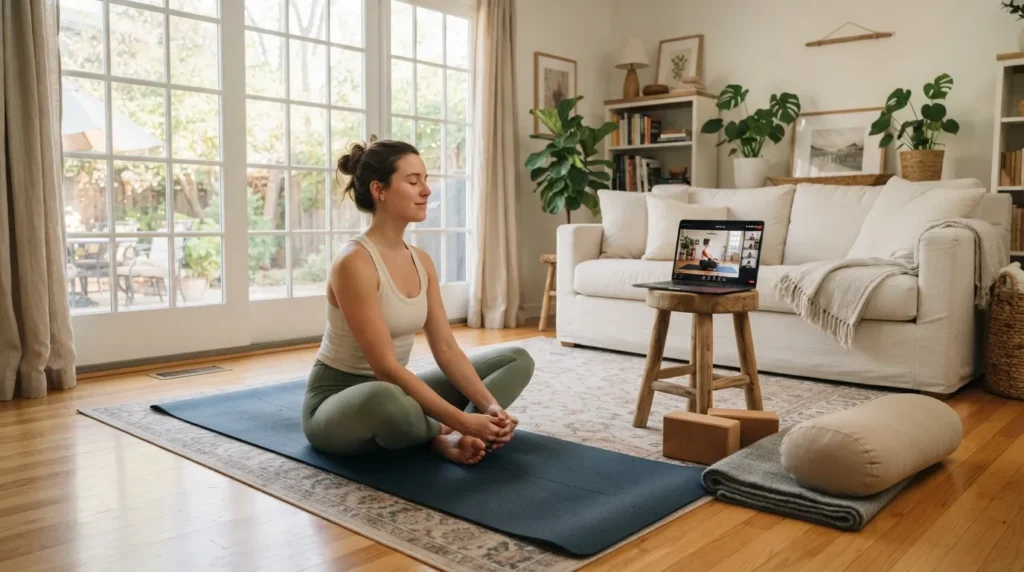
Online Yin Yoga classes bring this same slow, intentional practice directly into your living room. Most sessions include live guided classes, recorded replays, and simple instructions you can follow using just a mat and a few props like cushions or blankets. You log in, roll out your mat, and let an experienced instructor guide your breath and body through each pose at a pace that feels safe and manageable.
Who Should Join Yin Yoga Online Classes?
Yin Yoga is remarkably welcoming. It suits beginners who feel intimidated by fast-paced studio classes, busy professionals who need stress relief after long workdays, athletes recovering from intense training, and older adults looking for a joint-friendly practice. If you’ve ever wanted a form of exercise that also feels like therapy for your nervous system, Yin Yoga online classes are a wonderful place to start.
What Are the Benefits of Yin Yoga?
So, what are the benefits of yin yoga, exactly? The list is longer than most people expect. Regular practice can improve flexibility over time by gently lengthening connective tissue around the joints. It also supports joint mobility, which becomes increasingly important as we age or spend long hours sitting at a desk.
Beyond the physical, Yin Yoga encourages better posture, deep relaxation, and meaningful stress relief by activating the parasympathetic nervous system. Many students report better sleep, greater mental clarity, and an overall sense of calm that carries into their daily lives. Because the poses are held quietly and mindfully, Yin Yoga also gives your nervous system a genuine chance to reset.
Yin Yoga for Flexibility and Joints
One of the most searched benefits is yin yoga for flexibility and joints, and for good reason. Unlike muscles, which respond well to quick, dynamic movement, your fascia and connective tissue respond better to slow, sustained pressure. Holding a pose for three to five minutes allows the fascia to soften and gradually lengthen, which is something a fast-paced flow simply cannot achieve.
This slow approach is especially helpful for hip mobility and spine flexibility, two areas that tend to stiffen from prolonged sitting. Over weeks of consistent practice, many students notice improved range of motion, reduced stiffness, and healthier, more resilient joints.
Yin Yoga vs Restorative Yoga: What’s the Difference?
People often confuse Yin Yoga with Restorative Yoga, but the two practices serve different purposes. Understanding the yin yoga vs restorative yoga difference can help you choose the right class for your needs on any given day.
| Yin Yoga | Restorative Yoga |
| Longer holds | Full support with props |
| Deep stretch sensation | Passive relaxation |
| Works fascia and connective tissue | Works nervous system |
| Moderate sensation | Almost no stretch |
In short, Yin Yoga gently challenges your tissues, while Restorative Yoga is designed purely for rest. Many practitioners enjoy both, depending on whether they want a mild stretch or complete stillness.
Yin Yoga Poses for Beginners
If you’re new to the practice, here are several beginner-friendly yin yoga poses for beginners to start with.
Butterfly Pose
Sit with the soles of your feet together and let your knees fall open. This pose gently stretches the hips and inner thighs while calming the mind.
Dragon Pose
A low lunge held for several minutes, Dragon Pose deeply opens the hip flexors and groin, areas that carry a lot of stored tension from sitting.
Child’s Pose
A comforting resting posture that stretches the lower back and hips while encouraging slow, steady breathing.
Sphinx Pose
Lying on your stomach and propping up on your forearms gently stretches the lower spine and can help relieve mild back discomfort.
Caterpillar Pose
A seated forward fold that lengthens the entire back body, from the hamstrings to the spine, in a slow, supported way.
Reclining Twist
Lying on your back and gently twisting the knees to one side releases tension along the spine and supports healthy digestion.
Best Yin Yoga Sequence for Sleep
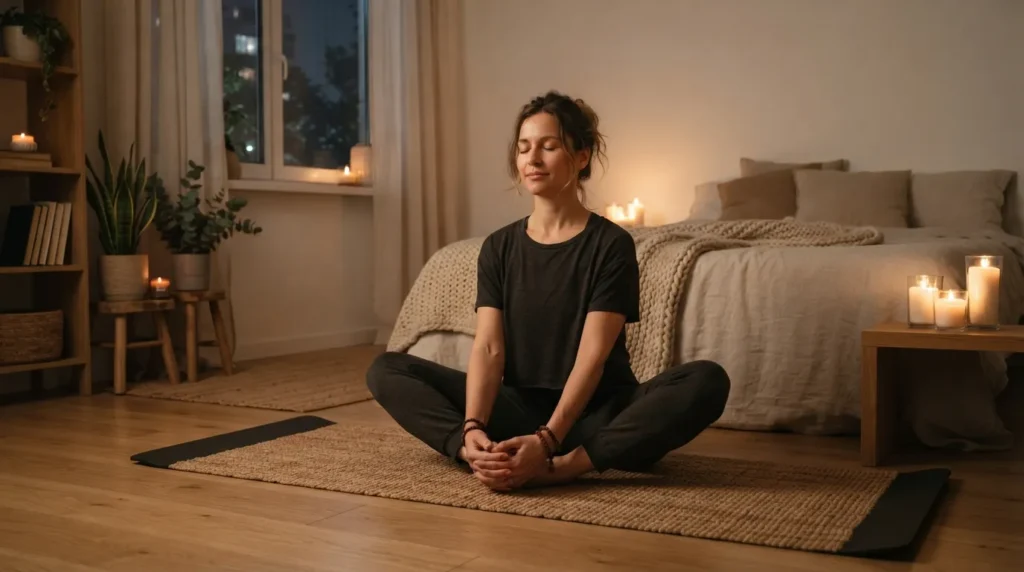
Looking for the best yin yoga sequence for sleep? Try this simple bedtime routine using calm, steady breathing throughout.
- Butterfly Pose – 3 minutes
- Caterpillar Pose – 4 minutes
- Reclined Twist – 3 minutes each side
- Legs Up the Wall – 5 minutes
- Savasana – 7 minutes
This sequence works because it shifts your body out of “fight or flight” mode and into a calm, restful state. The long, gentle holds slow your heart rate, quiet racing thoughts, and prepare your body for deeper, more restorative sleep.
How Long Should You Hold Yin Yoga Poses?
A common question new students ask is how long to hold each pose. For beginners, two to three minutes per pose is a comfortable starting point. As your body adapts, intermediate practitioners often hold poses for three to five minutes, while advanced students may hold for five to ten minutes.
Throughout each hold, slow and steady breathing is essential. Breathing deeply helps your muscles release and signals to your nervous system that it’s safe to relax fully into the stretch.
Can Yin Yoga Release Emotional Trauma?
This is a sensitive and important topic. Some practitioners do experience emotional release during or after a Yin Yoga session, such as unexpected tears or a wave of calm. Yin Yoga may help people become more aware of emotions or tension that has been stored in the body over time.
That said, Yin Yoga is not a treatment for trauma, and it should never replace professional care. If you’re working through difficult emotional experiences, we always recommend pairing your practice with support from a licensed therapist or mental health professional.
Yin Yoga Anatomy Basics
Understanding a little anatomy can deepen your practice. Yin Yoga primarily targets fascia, the connective web surrounding your muscles, along with ligaments and tendons that stabilize your joints. Because these tissues respond to slow, sustained pressure rather than quick movement, long holds are essential to the practice.
Your breath and nervous system also play a central role. Slow inhales and exhales help signal safety to your body, allowing tissues to soften and joints to move through their full, healthy range of motion over time.
Why Choose Yin Yoga Online Classes?
There are countless reasons students choose to practice online rather than in a physical studio. You can practice from home in comfortable clothing, at any time that fits your schedule. Flexible scheduling means you never have to miss a class due to traffic or conflicting commitments.
At One Yoga International, our expert teachers guide every session with care, and recorded classes let you revisit poses whenever you need a refresher. You’ll also find a warm, supportive community of fellow students, along with affordable pricing options designed to make consistent practice accessible for everyone.
How to Choose the Best Yin Yoga Online Classes?
Not all online classes are created equal. When searching for yin yoga classes online paid or free, look for these essentials:
- ✔ Certified instructors
- ✔ Beginner-friendly instruction
- ✔ Live classes for real-time guidance
- ✔ Replay access for flexibility
- ✔ Structured lesson plans
- ✔ Small class sizes for personal attention
- ✔ Reliable student support
Choosing a program that checks these boxes ensures you’re learning safely and building a sustainable, long-term practice.
Conclusion
Yin Yoga offers a rare combination of physical and emotional benefits, from improved flexibility and joint health to deeper sleep and genuine emotional wellbeing. Best of all, you don’t need a studio membership to experience these benefits. Learning online gives you the freedom to build a consistent, sustainable practice on your own schedule.
Ready to begin your Yin Yoga journey? Join One Yoga International’s Yin Yoga Online Classes and learn from experienced instructors through live and recorded sessions designed for every level.
Frequently Asked Questions (FAQ)
What are the benefits of yin yoga?
Yin Yoga improves flexibility, supports joint health, relieves stress, and promotes deep relaxation and better sleep.
Is yin yoga good for beginners?
Yes. Its slow pace and long holds make it one of the most accessible styles of yoga for complete beginners.
Can I do yin yoga every day?
Many people practice daily, though some prefer three to four sessions per week to allow tissues time to recover.
How long should yin yoga poses be held?
Beginners typically hold poses for two to three minutes, while more experienced practitioners may hold for five to ten minutes.
Is yin yoga good for sleep?
Yes, gentle evening sequences can calm the nervous system and prepare the body for deeper, more restful sleep.
Can yin yoga improve flexibility?
Absolutely. The long, sustained holds gradually lengthen connective tissue, improving flexibility over consistent practice.
What’s the difference between yin yoga and restorative yoga?
Yin Yoga involves moderate stretching sensation and works the fascia, while Restorative Yoga uses full support for pure passive relaxation.
Can I learn yin yoga online?
Yes, online yin yoga teacher training and beginner classes make it easy to learn safely from home with expert guidance.