

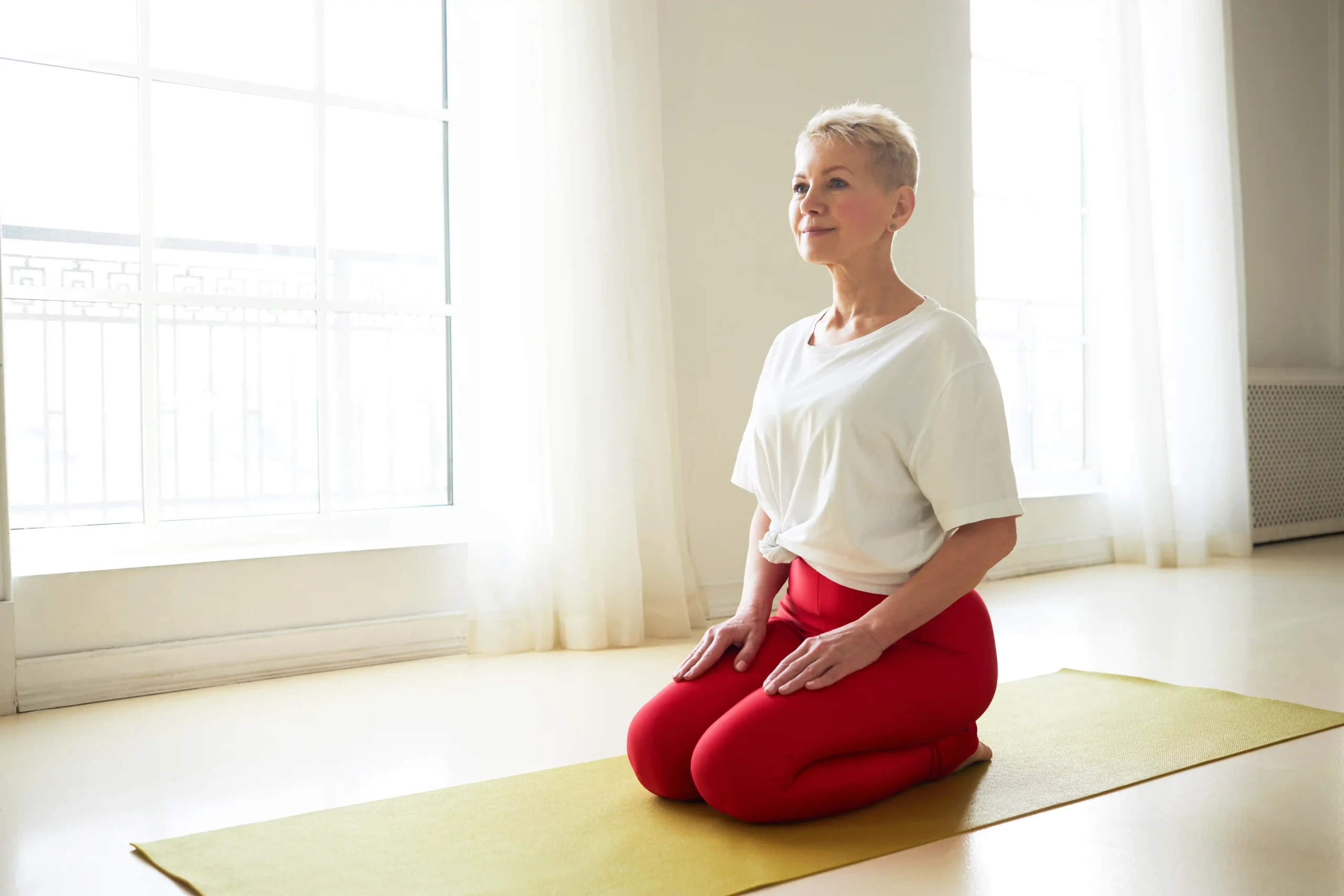
Menopause is a natural biological transition that typically occurs between the ages of 45 and 55, marking the end of the menstrual cycle. While normal, menopause can bring a wide range of physical and emotional symptoms, including hot flashes, sleep disruption, joint pain, anxiety, mood changes, and decreased bone density.
Research increasingly supports yoga as a safe, effective, and accessible practice to help manage many common menopause symptoms—without medication or high-impact exercise.
How Yoga Helps Women During Menopause
1. Yoga Helps Reduce Hot Flashes and Night Sweats
Studies suggest that yoga may help reduce the frequency and intensity of hot flashes by regulating the autonomic nervous system and lowering stress-related cortisol levels. While results vary, women who practice yoga consistently often report improved temperature regulation and fewer vasomotor symptoms.
2. Yoga Improves Sleep Quality
Sleep disturbances are among the most reported menopause symptoms. Yoga has been shown to improve sleep efficiency by calming the nervous system, reducing mental agitation, and relaxing muscular tension.
Slow movement, breathwork, and restorative yoga before bedtime can support longer and more restful sleep.
3. Yoga Reduces Stress, Anxiety, and Mood Changes
Hormonal fluctuations during menopause can affect neurotransmitters such as serotonin and dopamine, contributing to mood swings, anxiety, and depression. Yoga supports emotional regulation through breath control, mindfulness, and meditation.
Multiple studies show that yoga can significantly reduce perceived stress and improve overall mood in menopausal women.
4. Yoga Supports Bone Density and Muscle Strength
The decline in estrogen during menopause increases the risk of osteoporosis and muscle loss. Weight-bearing yoga poses help stimulate bone tissue while strengthening muscles that support posture, balance, and joint health.
Yoga also improves balance and coordination, reducing the risk of falls.
5. Yoga Helps Relieve Joint Pain and Stiffness
Joint pain and stiffness are common menopause-related complaints due to inflammation and reduced collagen. Yoga improves joint mobility, circulation, and muscular support without placing excessive strain on the joints.
Regular practice can help maintain flexibility and functional movement.
6. Yoga Supports Cardiovascular and Metabolic Health
Menopause is associated with changes in cholesterol levels, blood pressure, and metabolic health. Yoga has been shown to improve cardiovascular markers, reduce blood pressure, and support healthy weight management when practiced consistently.
Best Types of Yoga for Menopause
Evidence suggests that the following styles are particularly beneficial:
- Gentle Hatha yoga
- Restorative yoga
- Yin yoga
- Slow flow or mindful vinyasa
- Breathwork (pranayama) and meditation
Consistency is more important than intensity when practicing yoga during menopause.
Practice Yoga at Home or Live With One Yoga International
One Yoga International offers accessible yoga classes designed to support women during menopause—whether you prefer practicing at home or in a live, guided setting.
✨ Free Yoga Resources:
Explore menopause-supportive yoga practices on the One Yoga International YouTube channel, including gentle movement, breathwork, and relaxation sessions.
✨ Live & On-Demand Yoga Classes:
Join our live online classes or access our Classes on-demand class library to practice safely and consistently at your own pace.
Yoga as a Research-Supported Tool for Menopause Wellness
Yoga is not a cure for menopause, but research supports its role in improving quality of life, reducing stress, supporting sleep, and maintaining strength and mobility during this stage of life.
For many women, yoga becomes a sustainable, evidence-based practice that supports physical health and emotional well-being during menopause and beyond.
